
The cheapest phone service is rarely the one with the lowest advertised price. It is the plan whose data, coverage and fees match how you actually use your phone. Measure your own usage first, pick the network that covers the places you go, then shop price against that.
Start with your last three bills. Look at the data you used, not the data you bought. Most people pay for a tier two or three steps above anything they touch.
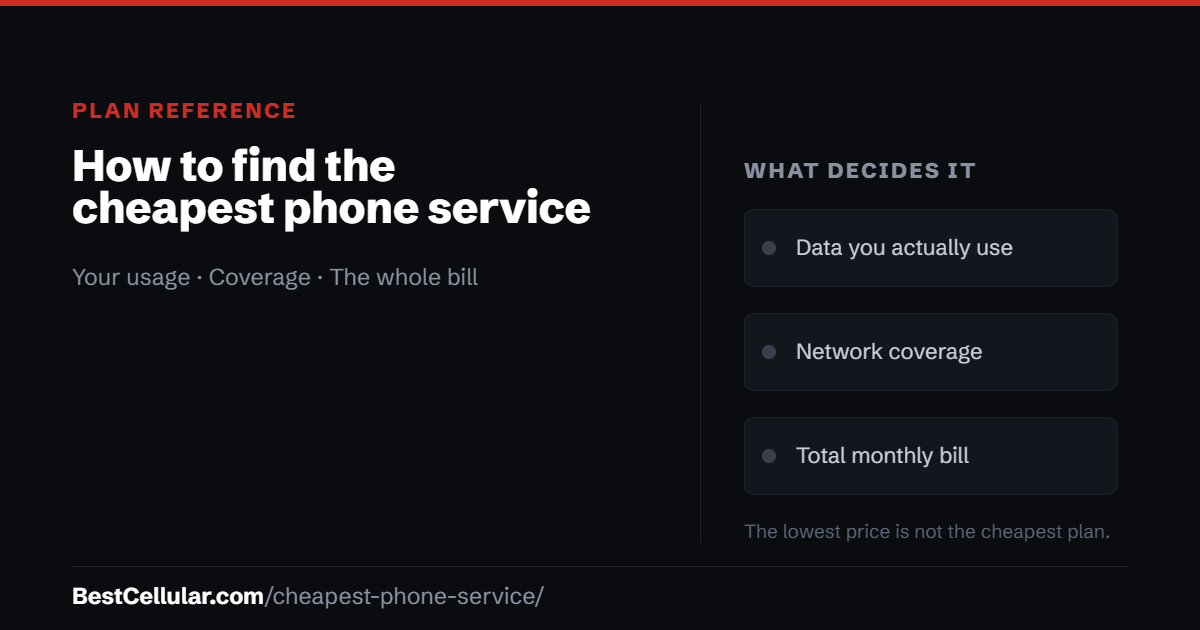
How to find the cheapest phone service for your usage
- Pull your real data usage. Every carrier app shows the last several months. Use your highest month, not the average. That is the tier you actually need.
- Count every line on the bill. Tablets, smartwatches and a line for a phone sitting in a drawer are the most common silent charges people carry for years.
- Choose the network before you choose the price. Coverage is the one thing a cheap plan cannot fix. Check the map at your home, your work and the route between them.
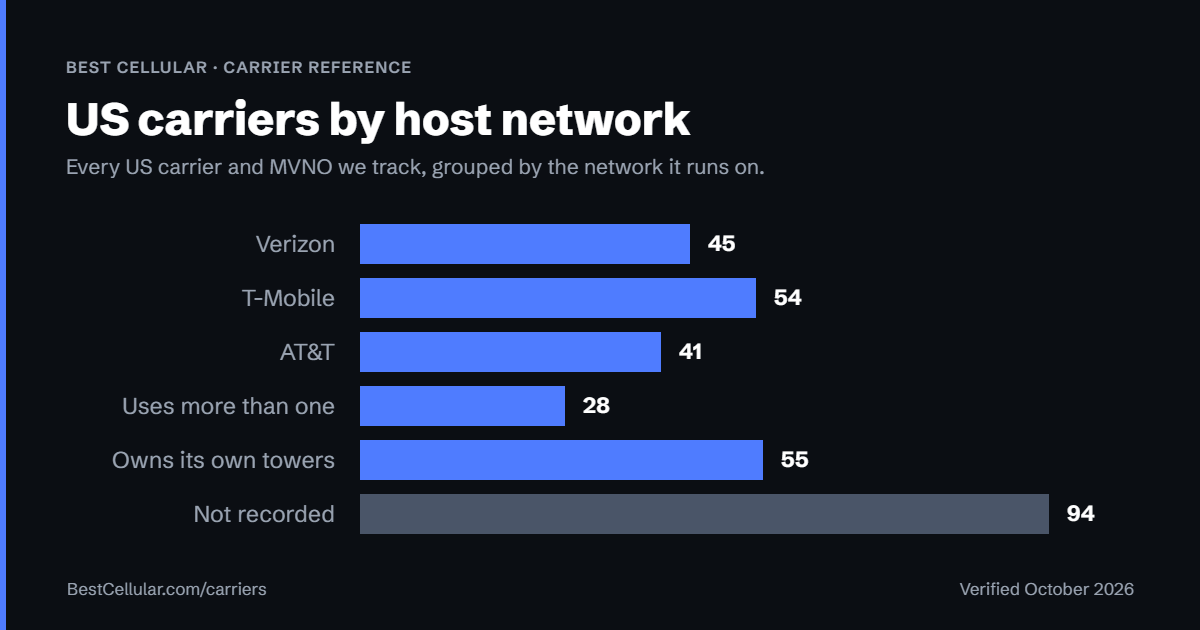
- Shop the carriers that run on that network. Smaller carriers resell the big three networks. The signal is the same; the price usually is not.
- Price the whole bill. Taxes, regulatory fees, autopay and paperless discounts, and any device payment decide what actually leaves your account each month.
What makes a cheap plan expensive
- Deprioritization. Most low-cost plans move you behind the host network’s own customers when a tower is busy. You keep service; it just slows down. If you live somewhere congested, this is the trade you are making.
- A hotspot allowance that is separate from your data. Plans often advertise a large data figure and a much smaller tethering figure.
- Autopay pricing. The advertised rate frequently assumes autopay and paperless billing. Miss either and the real rate applies.
- A device payment hiding inside the plan price. A “free” phone is a monthly credit spread over two or three years, and it usually dies if you leave early.
- Taxes and fees quoted separately. Some carriers include them in the advertised price and some do not, which makes two plans look closer than they are.
- Lines you stopped using. Cancelling a line you forgot about beats any plan change.
Bring your own phone before you buy a new one
The fastest way to cut a bill is to stop financing hardware. A phone you already own is free. Before you move it, confirm the phone is unlocked and that its bands work on the network you are moving to — a phone built for one network can lose coverage on another even when it powers on and shows bars.
If your phone is more than a few years old, check whether it supports VoLTE. Carriers have retired their older voice networks, and a handset without VoLTE can activate and still fail to make calls.
Check these before you switch
- Coverage at your addresses. Not your city — your actual home and workplace.
- That your phone is unlocked and compatible. Ask your current carrier to unlock it before you cancel anything.
- Your account number and transfer PIN. These are what the new carrier needs to move your number, and they are not your account password.
- Whether you owe anything on the device. An unpaid balance can keep a phone locked.
- That you do not cancel first. Cancelling before the transfer completes is the one reliable way to lose your number.
Your right to take your number with you is federal, not a carrier courtesy. The rule is the FCC’s: Portability: Keeping Your Phone Number When Changing Service Providers.
Cheapest phone service: common questions
What is the cheapest phone service in the US?
There is no single answer, because the cheapest plan depends on your data use, how many lines you carry and which network reaches you. A light user on a smaller carrier pays a fraction of what a family on a flagship plan pays for the same network.
Is cheaper phone service slower?
Not by default. Low-cost carriers usually run on the same towers as the big three. What changes is priority: when a tower is congested, the host network’s own customers go first. Away from congestion you will not notice a difference.
Can I keep my phone number if I switch to a cheaper carrier?
Yes. Number portability is a federal right. Start the transfer with the new carrier and keep the old line active until it completes.
Do I have to buy a new phone to change carriers?
Usually not. Most unlocked phones move between carriers, but band support and VoLTE matter. Check compatibility before you order a SIM.
What is the cheapest way to add a line for a child?
Adding a line to an existing account is not automatically cheapest. Compare it against a separate low-data plan on the same network, which is often less and can be cancelled on its own.