
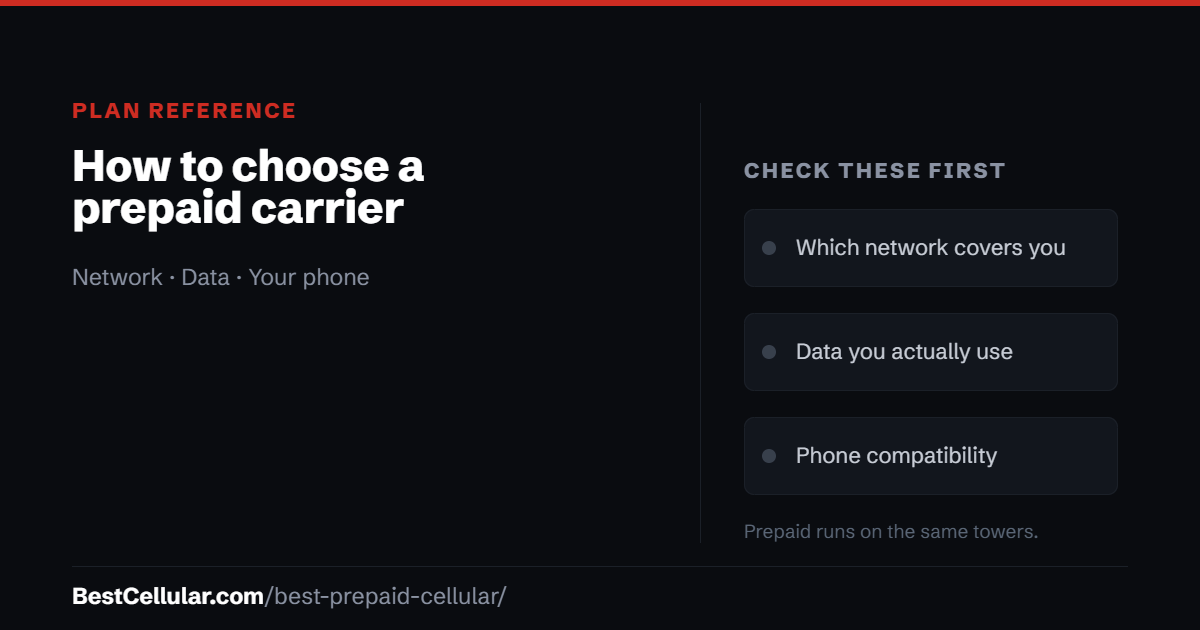
Best prepaid cellular is not a single company. Prepaid carriers resell the same three national networks, so the right one for you is decided by which network covers your address, how much data you actually use, and whether your current phone will work on it.
Prepaid is a billing model, not a lower grade of service. You pay before the month instead of after it. The towers are the same towers.
What prepaid actually means
A prepaid plan is paid in advance, has no contract, and runs no credit check. When the month ends you either pay again or the line stops. That is the whole difference.
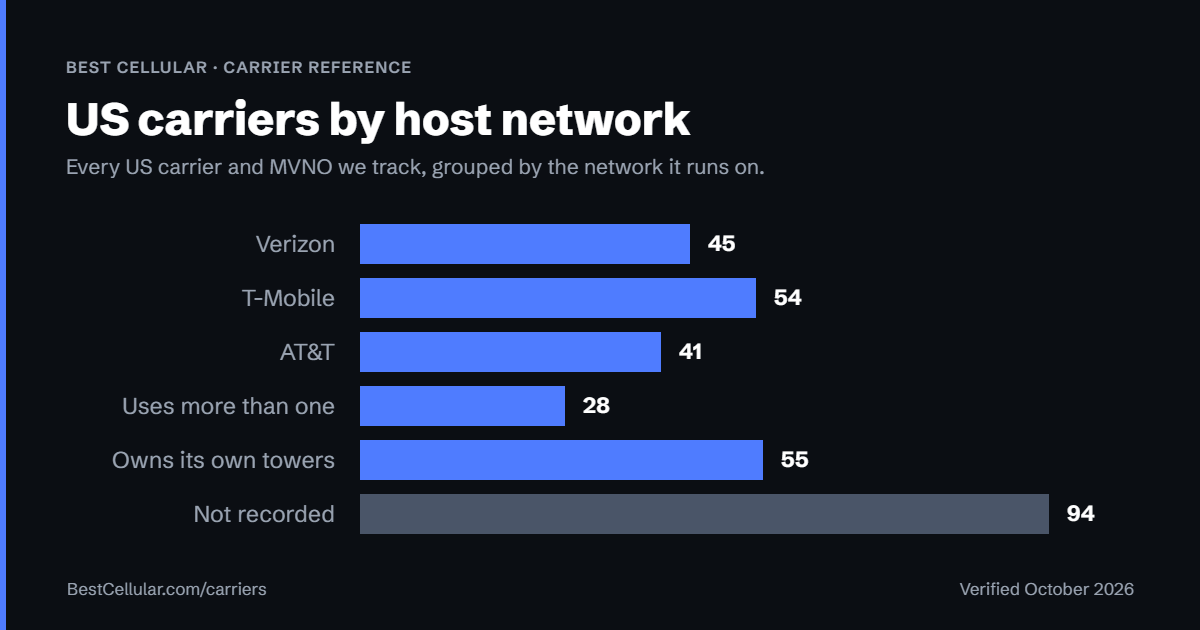
Almost every prepaid brand is an MVNO: it buys wholesale access to Verizon, T-Mobile or AT&T and sells it under its own name. The signal reaching your phone is the host network’s signal. What the brand controls is price, data allowance, customer service and how you are treated when a tower is busy.
Best prepaid cellular: 6 checks before you switch
- Which network covers you. Check the map at your home and your work, not your city. This decides which prepaid brands are even candidates.
- How much data you really use. Take the highest of your last three months from your carrier’s app. Buy that, not double it.
- What happens when the tower is busy. Most prepaid plans sit behind the host network’s own customers during congestion. In a crowded area that is the difference you will feel.
- Whether your phone is unlocked and compatible. Band support and VoLTE both matter. A phone can activate and still fail to make calls.
- Hotspot, roaming and international terms. These are where prepaid plans differ most, and where the cheap ones cut.
- How you get support. Some prepaid brands are online-only. If you want a person on the phone, confirm that before you switch.
Prepaid compared with postpaid
Postpaid bills you after the month, runs a credit check, and usually bundles a phone you pay off over two or three years. It tends to include priority data, better roaming and device financing.
Prepaid skips the credit check and the contract. You bring your own phone or buy one outright. You can leave any month without a termination fee, which is the real advantage: switching costs you nothing but the time it takes to port your number.
Who prepaid suits
- People who already own their phone. No financing means no reason to accept a contract.
- Light and moderate data users. The savings are largest below the unlimited tiers.
- Anyone who wants to keep options open. No contract means you can move the month a better plan appears.
- Second lines and kids’ phones. A separate low-data prepaid line is often cheaper than adding a line to a family plan.
Prepaid suits you less if you need a financed flagship phone, heavy international roaming, or priority data in a congested area.
Whichever you choose, your number is yours. The right to take it with you is federal, not a carrier policy: Portability: Keeping Your Phone Number When Changing Service Providers.
Best prepaid cellular: common questions
Is prepaid cell phone service worse than postpaid?
Not in coverage. Prepaid brands run on the same towers. The usual trade-off is data priority during congestion, plus fewer perks and less device financing.
Can I keep my number on a prepaid plan?
Yes. Number portability applies to prepaid exactly as it does to postpaid. Keep the old line active until the transfer completes.
Do prepaid plans run a credit check?
No. That is one of the defining features. You pay in advance, so there is nothing to underwrite.
Will my current phone work on a prepaid carrier?
Usually, if it is unlocked and supports the right bands and VoLTE. Check compatibility before you order a SIM or eSIM.
What happens if I do not pay a prepaid bill?
Service stops at the end of the paid period. There is no late fee and no collections, but after a grace period you can lose the number, so port out before you stop paying.